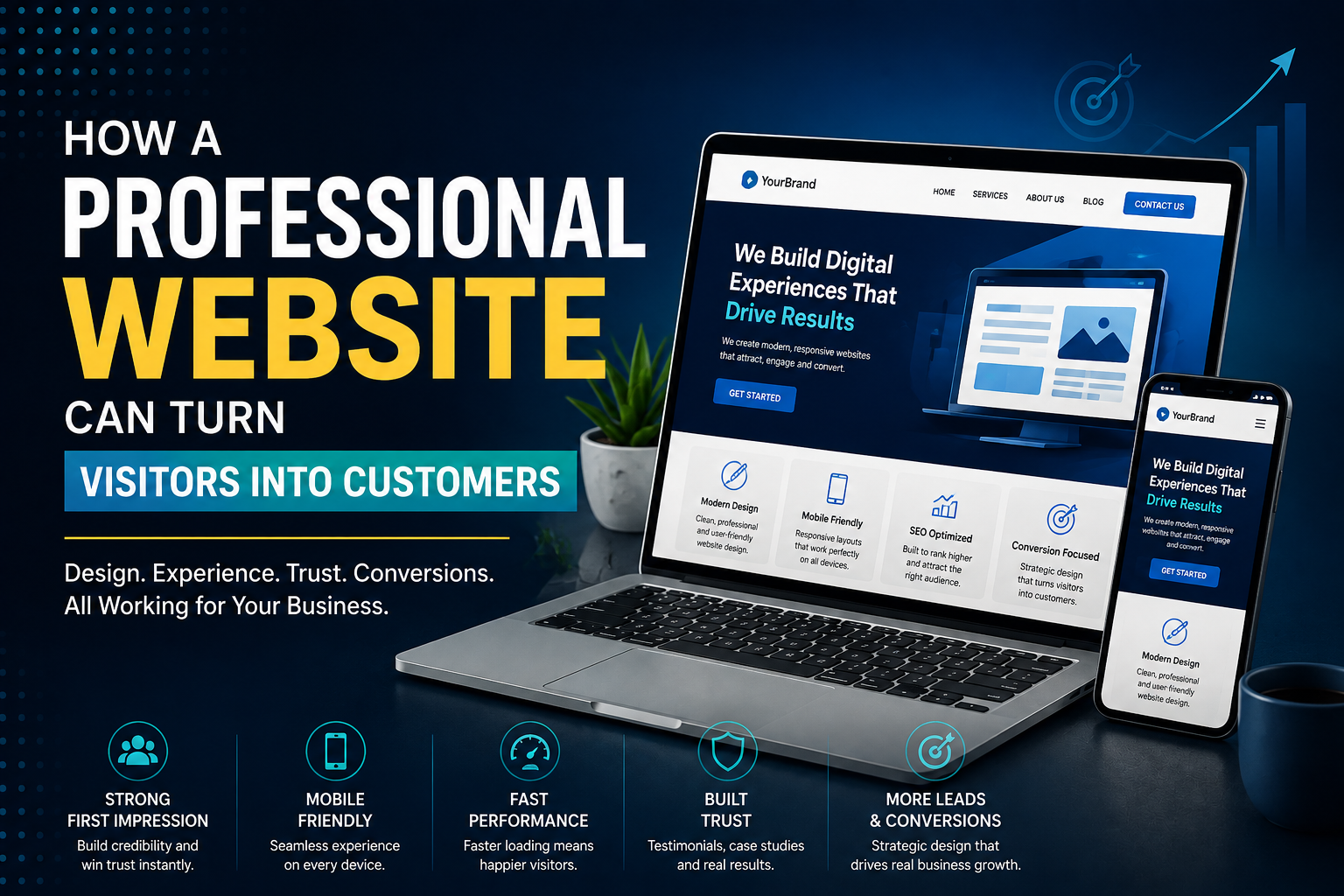
In today’s digital-first world, a business website is more than an online brochure. It is often the first place where potential customers discover your brand, learn about your services, compare you with competitors, and decide whether they want to contact you.
A professionally designed website can build trust, communicate your value, generate leads, and support long-term business growth. On the other hand, a slow, outdated, or confusing website can cause potential customers to leave before they even understand what your business offers.
For businesses looking to strengthen their online presence, investing in a customer-focused website can make a significant difference.
1. Create a Strong First Impression
First impressions matter online. When visitors arrive on your website, they immediately form an opinion about your business based on its design, layout, content, and overall experience.
A modern website should have a clean visual structure, consistent branding, readable typography, high-quality images, and clear navigation. Your homepage should quickly communicate who you are, what you offer, and how you can help customers.
Professional design does not mean adding unnecessary animations or complicated elements. Instead, it means creating an experience that looks trustworthy while making it easy for visitors to find the information they need.
2. Make Your Website Easy to Navigate
A beautiful website is not useful if visitors cannot find what they are looking for.
Simple and intuitive navigation helps users move between important pages such as About Us, Services, Products, Blog, Contact, and FAQs.
Menus should be organized logically, while important information should be accessible within a few clicks. Clear buttons and calls-to-action can also guide users toward the next step.
For example, a service page could include a “Request a Quote” or “Talk to Our Team” button, making it easier for interested visitors to start a conversation.
3. Optimize for Mobile Users
A large number of people access websites through smartphones and tablets. This makes responsive design an essential part of modern website development.
A responsive website automatically adjusts its layout according to the user’s screen size. Text should remain readable, buttons should be easy to tap, images should fit correctly, and menus should work smoothly on smaller screens.
If a website works well on desktop but provides a poor mobile experience, businesses can potentially lose valuable visitors and leads.
4. Improve Website Loading Speed
Website speed can strongly influence user experience. Visitors generally do not want to wait for large images, complicated animations, or unnecessary elements to load.
Slow websites can lead to higher bounce rates and frustrated users.
Businesses can improve website performance by compressing images, reducing unnecessary plugins and scripts, using optimized hosting, implementing caching, and keeping the website’s code and resources efficient.
A fast website creates a smoother experience and allows visitors to access important information quickly.
5. Use Clear and Persuasive Content
Design attracts attention, but content helps visitors make decisions.
Website content should explain your products or services in simple and customer-focused language. Instead of only describing what your company does, explain how your services can solve customer problems.
For example, instead of simply saying “We provide web development services,” a stronger message could explain how your team creates fast, responsive, secure, and conversion-focused websites that help businesses grow online.
Headings, short paragraphs, bullet points, statistics, testimonials, and case studies can make content easier to understand.
6. Build Trust With Social Proof
Customers want to know that they can trust a business before making a purchase or contacting the company.
Websites can build credibility by displaying customer reviews, testimonials, case studies, certifications, awards, client logos, and project results.
Authentic testimonials can help potential customers understand the experience of working with your business. Case studies can go even further by showing the challenges a customer faced, the solution provided, and the results achieved.
7. Add Strong Calls-to-Action
Every business website should have a clear goal. This could be generating leads, receiving inquiries, selling products, scheduling consultations, or encouraging visitors to contact the company.
Calls-to-action help guide users toward that goal.
Examples include:
- Get a Free Consultation
- Request a Quote
- Contact Our Team
- Explore Our Services
- Start Your Project
- Book a Meeting
The CTA should be visually noticeable without disrupting the overall design of the page.
8. Design With SEO in Mind
A professional website should not only look good; it should also be easy for search engines to understand.
SEO-friendly website development includes proper heading structures, optimized page titles, meta descriptions, relevant keywords, descriptive image alt text, clean URLs, internal linking, mobile responsiveness, and fast loading performance.
Combining good design with SEO allows businesses to create websites that are both user-friendly and discoverable through search engines.
9. Keep Your Website Updated
Launching a website is not the end of the process. Businesses should regularly update their content, services, images, blogs, security features, plugins, and technical components.
Fresh content can also encourage visitors to return and provides additional opportunities to attract organic search traffic.
Regular website maintenance helps keep the site secure, functional, and aligned with changing customer expectations.
Conclusion
A professional website can become one of the most valuable digital assets for a business. It works around the clock to introduce your brand, communicate your services, build credibility, answer customer questions, and generate potential leads.
However, successful website design is not simply about making a website look attractive. It is about combining design, usability, performance, content, SEO, and conversion strategy to create an experience that supports business goals.
If your current website feels outdated, loads slowly, is difficult to navigate, or fails to generate inquiries, it may be time for a redesign.
A well-planned website does more than represent your business online—it can become a powerful engine for visibility, credibility, customer engagement, and growth.