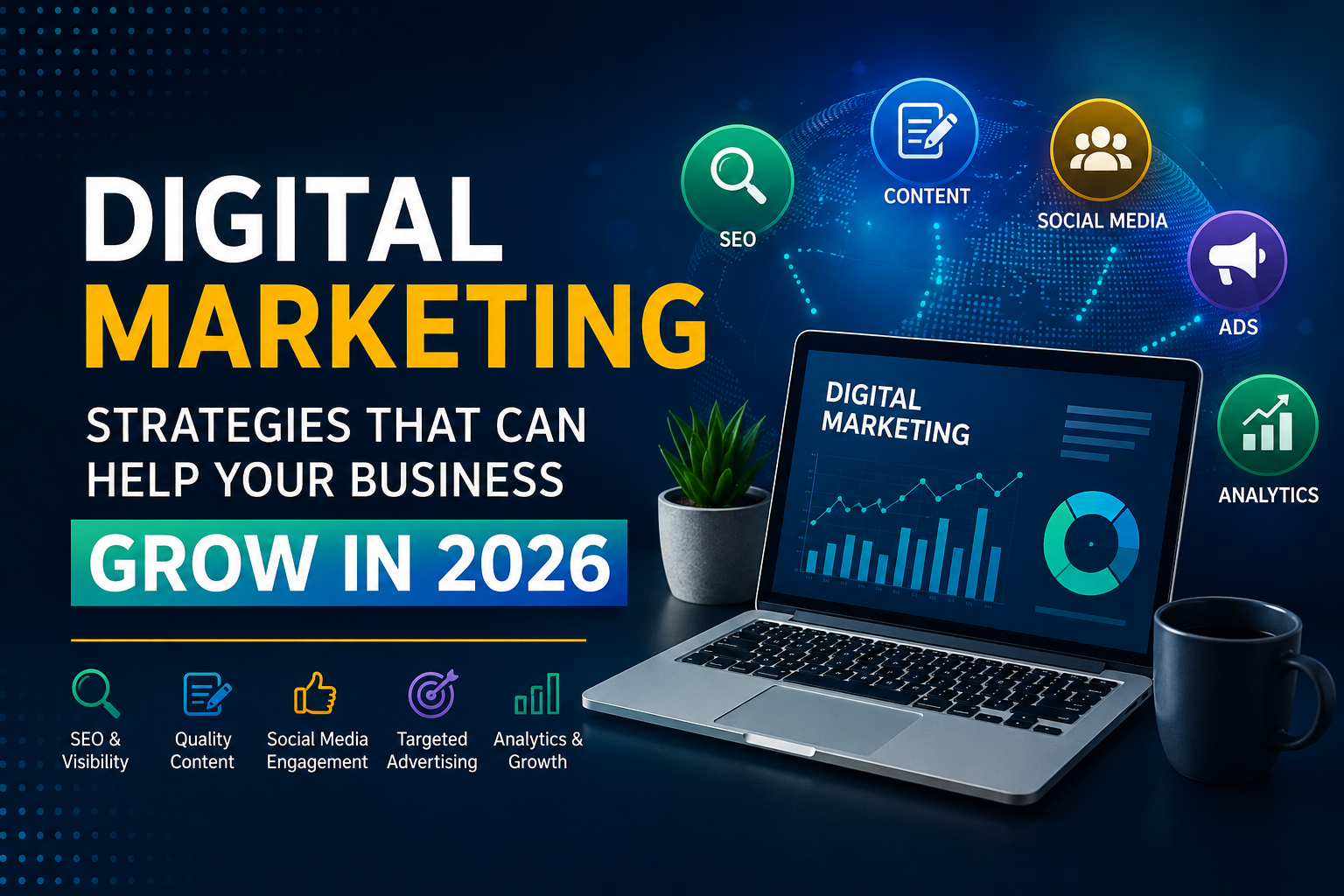
In today’s competitive digital landscape, having an online presence is no longer optional for businesses. Customers search online before making purchasing decisions, compare brands, read reviews, and interact with businesses through websites and social media. This makes digital marketing one of the most important tools for building brand awareness, attracting customers, and increasing revenue.
A well-planned digital marketing strategy helps businesses reach the right audience at the right time through the right channels. Whether you are a startup, local business, or established company, combining SEO, content marketing, social media, paid advertising, and data-driven strategies can create sustainable business growth.
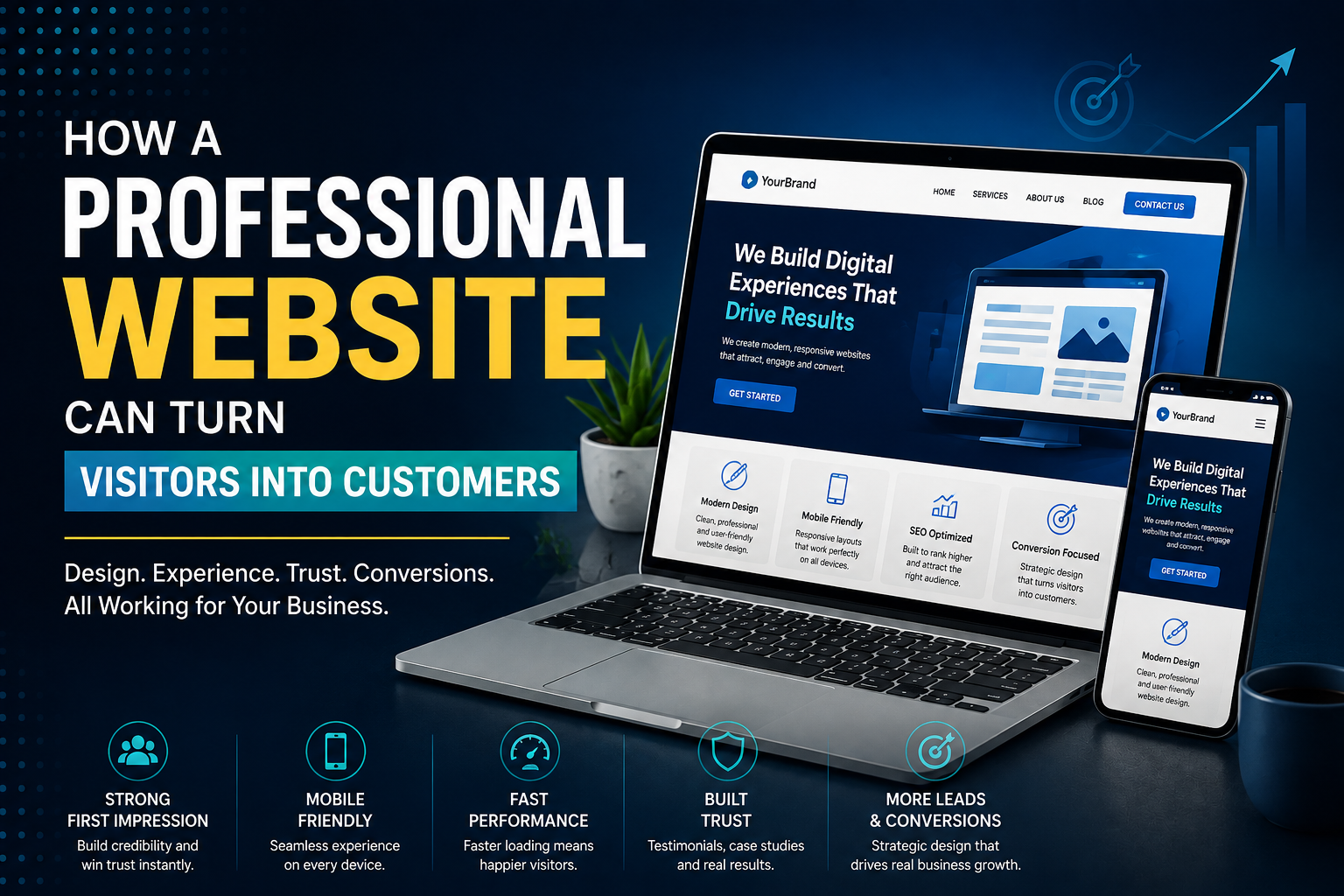
1. Build a Strong and Professional Website
Your website is often the first interaction a potential customer has with your brand. A professional website should be visually appealing, mobile-friendly, fast, easy to navigate, and designed around the needs of your target audience.
Every page should have a clear purpose. Visitors should quickly understand what your business offers, why they should choose you, and what action they should take next. Strong calls-to-action such as “Get a Quote,” “Contact Us,” or “Book a Consultation” can help turn website visitors into potential customers.
Website design should also support search engine optimization. Well-structured pages, relevant keywords, optimized images, fast loading times, and useful content can improve both user experience and search visibility.
2. Invest in Search Engine Optimization
Search Engine Optimization, commonly known as SEO, helps your website appear when people search for products or services related to your business.
A successful SEO strategy involves more than simply adding keywords to a webpage. It includes keyword research, technical optimization, high-quality content, internal linking, website performance, mobile optimization, and building trustworthy online authority.
For example, a digital marketing agency targeting local businesses may optimize its website for searches such as “digital marketing agency near me,” “SEO services for small businesses,” or “social media marketing agency.”
SEO is particularly valuable because it can generate organic traffic over time. Unlike advertising, where traffic generally stops when the budget ends, a well-optimized website can continue attracting visitors through search engines.
3. Create Valuable Content
Content marketing is another powerful component of digital marketing. Customers do not always want to be sold to immediately. They often want answers, information, comparisons, and solutions before making a decision.
Businesses can use blogs, guides, videos, infographics, case studies, and social media posts to educate their audience.
For example, a web development company could publish articles about website design trends, WordPress tips, website security, or common website mistakes. Such content can attract people who are actively looking for solutions and gradually build trust in the brand.
High-quality content should focus on solving real customer problems rather than simply promoting products or services.
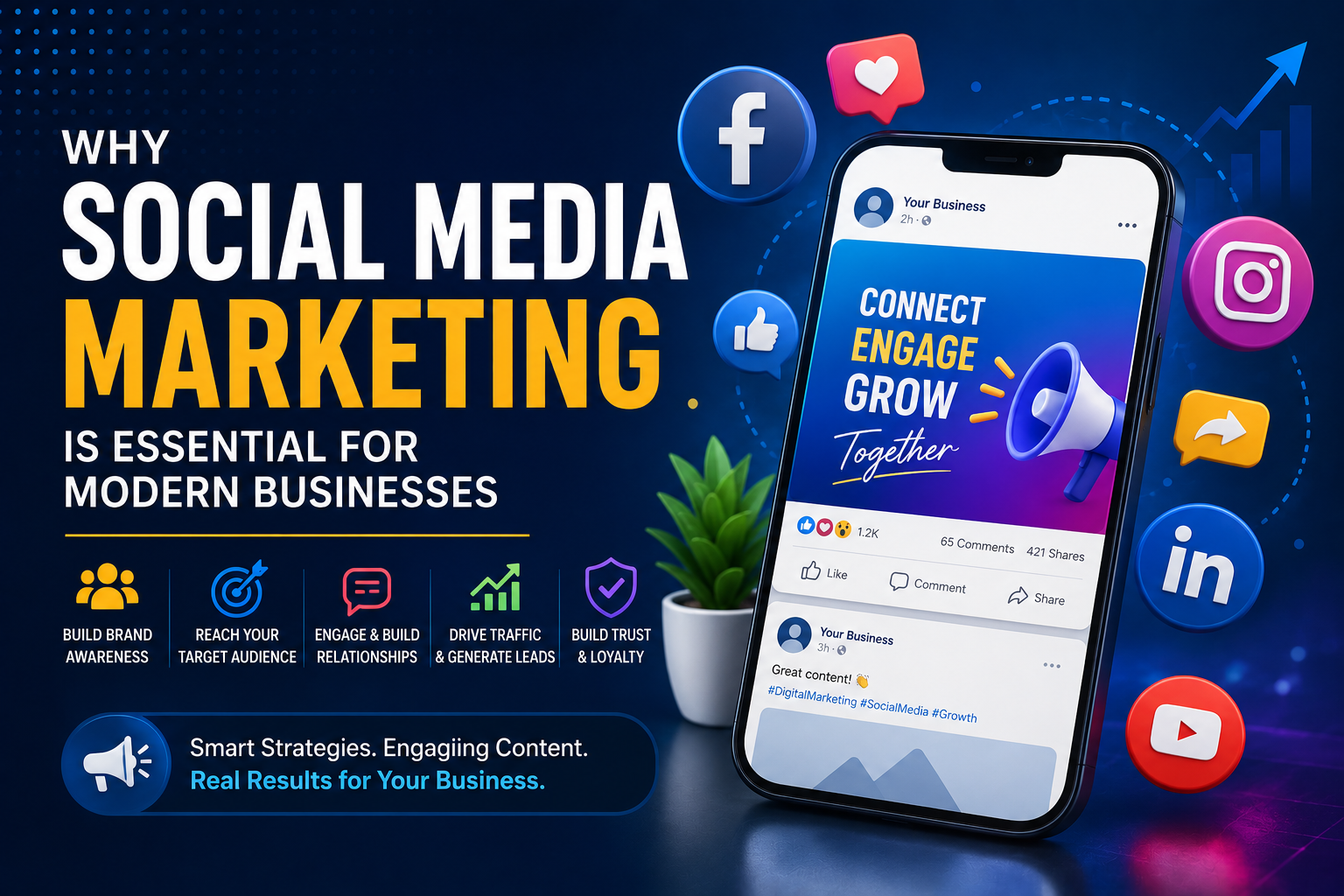
4. Use Social Media Strategically
Social media provides businesses with an opportunity to communicate directly with their audience. Platforms such as Instagram, Facebook, LinkedIn, and YouTube can help businesses increase visibility, showcase expertise, and develop stronger relationships with customers.
However, effective social media marketing is not about posting randomly every day. Businesses should create content based on their audience, goals, and platform.
Educational posts can establish authority, behind-the-scenes content can humanize a brand, customer testimonials can build trust, and short videos can increase engagement.
Consistency is important, but quality and relevance should always come first.
5. Use Paid Advertising to Reach the Right Audience
Paid advertising can provide businesses with faster visibility and targeted traffic. Search advertising, social media advertising, display campaigns, and remarketing can all be used depending on business objectives.
One major advantage of digital advertising is targeting. Businesses can reach audiences based on factors such as location, interests, search behavior, demographics, and previous interactions with a website.
However, successful advertising requires more than simply spending money. Campaigns should have clear objectives, compelling advertisements, relevant landing pages, and continuous performance monitoring.
6. Focus on Data and Analytics
One of the biggest advantages of digital marketing is the ability to measure results.
Businesses can track website traffic, leads, conversions, engagement, advertising performance, and customer behavior. This information helps marketers understand what is working and where improvements are needed.
Instead of making decisions based only on assumptions, businesses can use real data to optimize their marketing strategies.
For example, if one landing page generates significantly more leads than another, the business can analyze what makes it successful and apply similar principles to other campaigns.
7. Personalize the Customer Experience
Modern customers expect brands to understand their needs. Personalization can make digital experiences more relevant and engaging.
Businesses can personalize email campaigns, website recommendations, advertisements, offers, and content based on customer interests and previous interactions.
Even simple personalization, such as addressing customers by name or recommending services based on their interests, can make communication feel more relevant.
8. Work With a Digital Marketing Agency
Managing every aspect of digital marketing internally can be challenging, especially for small and growing businesses. A professional digital marketing agency can bring together strategy, creative design, SEO, content, social media, advertising, and analytics.
The right agency does more than execute campaigns. It understands the business, identifies opportunities, studies competitors, analyzes performance, and develops strategies focused on measurable outcomes.
Conclusion
Digital marketing is not a single activity. It is a combination of strategies that work together to attract, engage, convert, and retain customers.
A strong website provides the foundation. SEO brings organic visibility, content builds trust, social media creates engagement, paid advertising accelerates reach, and analytics helps businesses make smarter decisions.
As competition continues to grow online, businesses that invest in a consistent, customer-focused, and data-driven digital marketing strategy can create stronger brands and sustainable growth.
The goal is not simply to be visible online. The goal is to be visible to the right people, provide genuine value, and turn attention into meaningful business results.