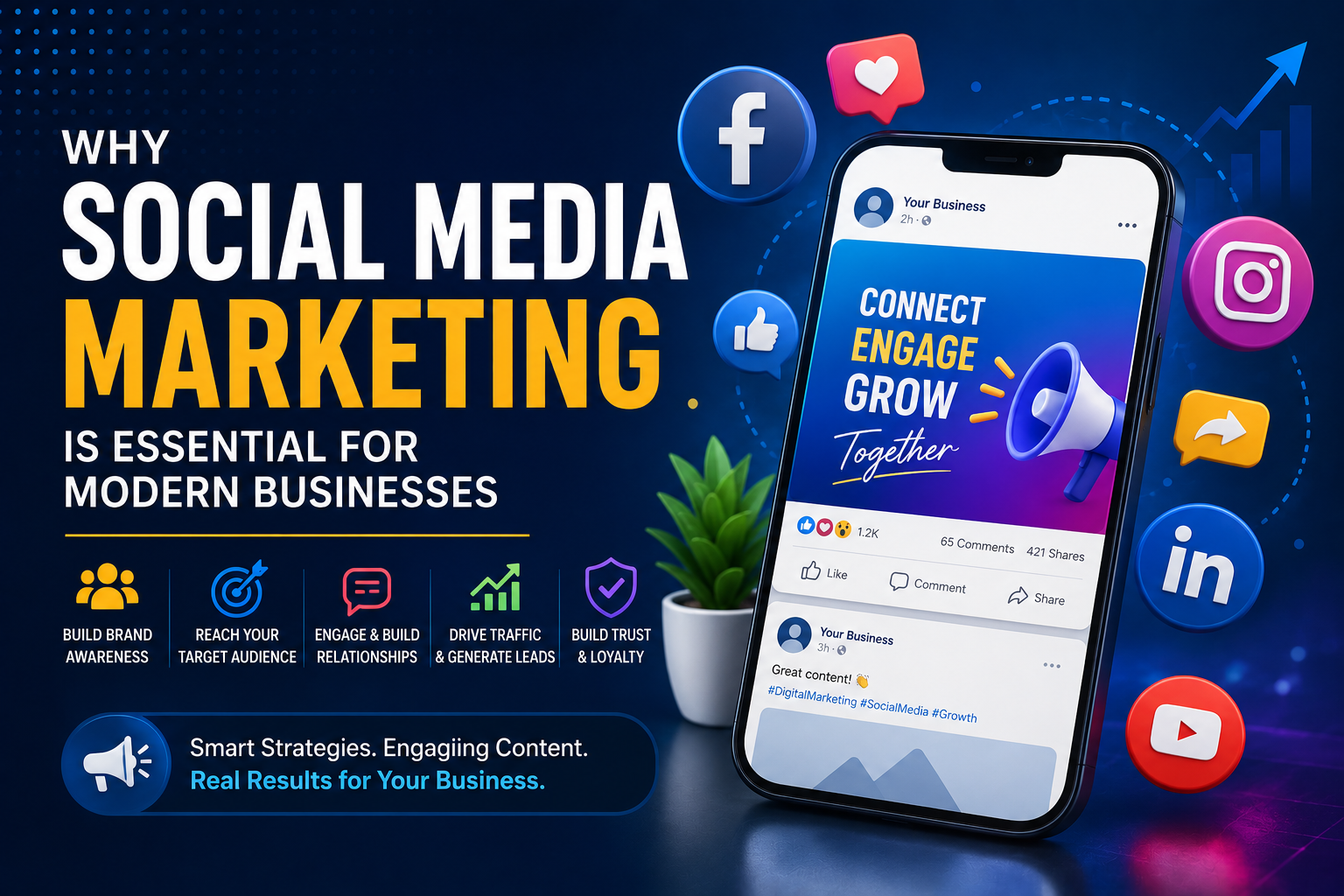
Social media has changed the way businesses communicate with customers. What was once primarily used for personal interaction has become an important business platform for building brands, attracting potential customers, and generating sales.
Today, customers often discover businesses through social media before visiting their websites or making purchasing decisions. This creates a valuable opportunity for businesses to connect with their target audience, showcase their expertise, and build lasting relationships.
However, successful social media marketing is about more than simply publishing posts. It requires a clear strategy, consistent communication, creative content, and continuous analysis.
1. Build Strong Brand Awareness
One of the biggest advantages of social media marketing is the ability to increase brand visibility.
Businesses can use platforms such as Instagram, Facebook, LinkedIn, YouTube, and other relevant channels to introduce their products and services to potential customers.
Consistent branding across social media helps people recognize your business. Using the same logo, colors, typography, tone of voice, and visual style can create a professional and memorable identity.
Over time, regular exposure can help your business remain recognizable when customers are ready to purchase.
2. Reach Your Target Audience
Traditional marketing often makes it difficult to reach a highly specific audience. Social media provides businesses with more opportunities to target people based on interests, behaviors, demographics, location, and other relevant factors.
For example, a local service business can focus its content and advertising on people within a specific geographic area, while a B2B company may use professional platforms to reach decision-makers and industry professionals.
Understanding your target audience is essential. Before creating content, businesses should consider what their customers need, what problems they face, and what type of information they find valuable.
3. Create Meaningful Customer Relationships
Social media allows businesses to communicate directly with customers.
Comments, messages, reactions, polls, and other interactions can create opportunities for two-way communication. Instead of simply advertising products, businesses can listen to customers, answer questions, address concerns, and collect feedback.
This interaction can make a brand feel more approachable and human.
A business that responds professionally and consistently to customers can strengthen trust and encourage people to engage with the brand in the future.
4. Use Content to Demonstrate Expertise
Social media is an excellent platform for sharing knowledge.
Businesses can publish educational posts, short videos, tutorials, tips, industry insights, FAQs, customer stories, and behind-the-scenes content.
For example, a digital marketing agency could share SEO tips, website design advice, social media strategies, and digital marketing trends.
This type of content demonstrates expertise while providing genuine value to the audience. Instead of constantly asking customers to buy something, businesses can become a useful source of information.
5. Generate More Website Traffic
Social media can also support website growth.
Businesses can share links to blog articles, service pages, landing pages, product pages, and other useful resources. When followers find the content interesting, they can visit the website to learn more.
A strong social media post combined with a relevant landing page can create a clear customer journey:
Social Media → Website → Information → Inquiry → Customer
The more effectively these stages are connected, the greater the opportunity to convert social media attention into business results.
6. Support Lead Generation
Social media can become an important source of leads when used strategically.
Businesses can use calls-to-action such as “Send Us a Message,” “Book a Consultation,” “Get a Free Quote,” or “Learn More” to encourage interested users to take action.
Lead-generation campaigns can also be combined with landing pages, forms, offers, and remarketing strategies.
However, generating leads is only one part of the process. Businesses also need a system for responding to inquiries quickly and professionally.
7. Strengthen Customer Trust
People are more likely to trust businesses that appear active, transparent, and professional online.
Social media provides an opportunity to showcase real projects, customer reviews, team members, company culture, achievements, and behind-the-scenes activities.
Testimonials and customer experiences can be particularly powerful because they provide social proof.
When potential customers see that other people have successfully worked with a business, they may feel more confident about starting a relationship themselves.
8. Take Advantage of Video Content
Video has become one of the most engaging forms of digital content.
Businesses can use short videos to explain services, demonstrate products, answer frequently asked questions, introduce team members, share tips, or showcase completed projects.
Video content does not always require expensive equipment. A clear message, good lighting, useful information, and consistent presentation can be enough to create valuable content.
Short-form videos can also help businesses reach new audiences when they are optimized for the platform and audience.
9. Measure What Works
An effective social media strategy should be based on data rather than assumptions.
Businesses can monitor metrics such as reach, impressions, engagement, website clicks, follower growth, leads, and conversions.
These insights can help identify which content performs best.
For example, if educational videos consistently receive higher engagement than promotional posts, the business can create more educational content while experimenting with different formats.
Regular analysis allows businesses to improve their strategy over time.
10. Maintain Consistency
One of the most common social media mistakes is inconsistent posting.
A business may publish several posts in one week and then disappear for an entire month. This can make the brand appear inactive.
Creating a realistic content schedule makes it easier to maintain consistency. Businesses should focus on producing valuable content regularly rather than trying to post excessively.
A well-planned content calendar can include educational posts, promotional content, customer stories, videos, industry updates, and interactive content.
Conclusion
Social media marketing has become an important part of building a modern business. It can help brands increase awareness, connect with customers, demonstrate expertise, generate website traffic, build trust, and create new business opportunities.
But successful social media marketing requires more than posting attractive images. It requires strategy, consistency, creativity, audience understanding, and data-driven improvement.
Businesses that focus on providing value and building genuine relationships can use social media as more than a promotional channel. They can turn it into a powerful platform for brand growth, customer engagement, and long-term business success.